

Global oil reserves have fallen to dangerously low levels at a time when military ignition in the Middle East continues to threaten the planet's primary energy arteries. The head of Saudi Aramco warns that the market has already consumed a large portion of available safety cushions and that even after the conflict ends, it may take up to two years to restore depleted oil reserves. At the same time, pressure is not limited to the Strait of Hormuz. A new attack in Saudi Arabia caused a shutdown of the East-West pipeline, a critical artery carrying crude to the Red Sea, while fighting in Yemen has moved to the strategically vital Bab el-Mandeb Strait. With sea and land routes facing new pressures and stocks remaining constrained, the global oil market supply faces an increasingly narrow safety margin.
"Dangerously low" reserves
Global oil reserves are now "dangerously low," said the chief executive officer of Saudi Aramco, warning that it will take up to two years to restore stocks depleted during the Middle East conflict. Amin Nasser stated that the war between the US and Iran has reduced crude oil supply from the region by "nearly 3 billion barrels," an amount representing roughly half of the crude oil and refined fuels that would have passed through the Strait of Hormuz during this period. More than 1 billion barrels of crude have been drawn from storage in an effort to offset the deficit, Nasser added.
Release of strategic reserves
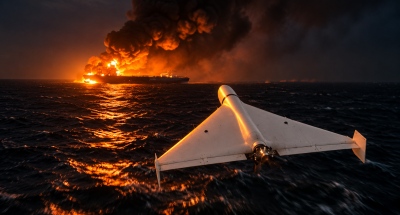
Governments have released more than 300 million barrels from their strategic reserves and on Friday (10/2/2026) agreed to release even larger quantities. However, Nasser stated that most of the energy used came from commercial inventories held by companies themselves, which he termed "the last major tool in the toolbox." In his first public speech since the outbreak of the war, the head of the Saudi state oil giant stated he estimates that "less than 6 billion barrels of commercial reserves remain today, with the vast majority not practically available." "The system is already stretched," he told the Energy Intelligence Forum conference in London. "And with very little left that the world can turn to, the cushion of supply resilience is dangerously thin." He added that modern technology, including "open data like satellite imagery and maritime tracking records," is increasingly being weaponized against critical infrastructure and oil tankers. In recent weeks, Iran has struck vessels moving through Hormuz, while its allies in Iraq and Yemen have attacked Aramco pipelines, refineries, and ports. "Transparency tools should not be converted into munitions for aggressive actions," Nasser said.
Flows through Hormuz
According to a report by the Financial Times, warnings from Saudi Aramco underscore the impact the conflict is having on the global oil market, even as a complex arrangement for moving petroleum through Hormuz is now helping restore shipping flows. Shipments from Gulf states rose to 15.5 million barrels per day last month, reaching their highest level since the start of the war and exceeding 80% of pre-conflict volumes, according to data provider Kpler. However, these shipments have become extremely expensive and energy markets remain exceptionally tight, with prices for North Sea crude cargoes scheduled for delivery this month rising to their highest levels since April. Nasser stated that even at the end of the conflict, "replenishing reserves alongside meeting demand could take up to two years," and urged governments to place greater emphasis on energy security and system resilience.
The battle at Bab el-Mandeb
Meanwhile, the Bab el-Mandeb Strait has evolved into an active battleground. Specifically, Saudi-backed Yemeni government forces seized key positions along the strait on Monday (10/5/2026), according to military and government sources, as they attempt to reverse Houthi advances from last month and expel them from the strategic maritime shipping lane. Government troops have taken control of large portions of the Dhubab district, which overlooks Bab el-Mandeb, and are seeking to bring the entire sector under their control with heavy air support from the Saudi-led coalition, three military sources and a government source told Reuters. Media outlets affiliated with the Houthis had previously denied that government forces made any territorial advances in the area. Fighting has raged across several front lines in Yemen for weeks following the reignition of a civil war that had remained dormant, further amplified by the wider US-Iran conflict. The Houthis seek to control the strategic Bab el-Mandeb Strait while launching missiles and drones against Saudi cities and infrastructure. With energy exports from the Gulf already constrained due to Iran's closure of the Strait of Hormuz, fighting in Yemen threatens yet another crucial crude export route, driving up global energy prices and introducing new risks to a region already in flames.
East-West "shuts down"
Meanwhile, crude oil flow in Saudi Arabia's East-West pipeline was halted again following a fresh attack on critical infrastructure, an energy sector source in the kingdom told AFP on Monday. "The East-West pipeline suffered a new attack yesterday," the source stated. "A pumping station east of Riyadh, at Khurais. It had not been targeted in the past. It sustained major damage and the pipeline stopped operating again." The information comes a day after Iran-backed Yemeni Houthis announced they targeted Saudi Arabian installations belonging to state oil giant Aramco, including facilities in the Khurais region. The East-West pipeline has been targeted repeatedly since the outbreak of war in the Middle East, which followed US and Israeli strikes against Iran.
Last month, Saudi Arabia, the world's top crude exporter, suspended operations on the 1,200-kilometer East-West pipeline, which connects major oilfields in the east of the country to the Yanbu shipping terminal on the Red Sea. The shutdown followed attacks on Saudi oil facilities originating from Iraq, where Iran-aligned armed groups operate. Flow through the pipeline remained offline from September 11 to September 22, according to commodity tracking platform Kpler. It is noted that the pipeline gained critical importance for Riyadh's energy trade following Iran's blockade of the Strait of Hormuz at the start of the Middle East war, which crippled Saudi Arabia's primary export route.
Saudi Arabia supports operation to retake territory
Saudi Arabia, which arms and trains Yemeni government forces, has requested logistical support from allies aiming to push back the Houthis, restore freedom of navigation in the Red Sea, and halt the group's strikes on its territory. While conflict rages across multiple front lines in Yemen, the fiercest battles are taking place in the southwest, both in the coastal zone near the strait and in the hills surrounding the city of Taiz, where Houthis are attempting to encircle government forces. A news agency controlled by the Houthis reported Monday that, according to a military source, the group expelled government forces from the al-Mawasit district of Taiz province, advancing up to the residence of Alimi, head of Yemen's presidential leadership council.
The mountainous sector lies near the main road connecting Taiz to Aden, the final highway connection available to government forces toward the city, which has been on the front line of the civil war since its inception. The conflict in Yemen began when Houthis seized the capital Sanaa in 2014, leading Saudi Arabia to intervene the following year at the head of a coalition with an air campaign aimed at restoring the government and expelling the Iran-backed movement. Battles quickly settled into a bloody stalemate with most fronts remaining static, triggering a massive humanitarian crisis in what was already the poorest Arab state, until a truce was agreed in 2022 that held until this summer.
www.bankingnews.gr









Σχόλια αναγνωστών